
🇦🇺 Caravan Parks In Australia | CARAVANingLife
27.0000° S, 133.0000° E
Quick Overview
Australia is one of the world's great touring destinations, and its caravan and holiday parks are the backbone of the trip. The challenge and the joy of caravanning here is scale: this is a continent that spans the tropics to the cool south, so the right place to be changes with the season, and the camping ranges from polished family holiday parks to free bush camps under the stars. Get the rhythm of it and you will understand why so many Australians spend months, even years, touring their own country.
The easiest place to start is the big private holiday-park networks. BIG4 Holiday Parks runs over 300 family-focused private parks with pools, jumping pillows, camp kitchens, and powered sites, while Discovery Parks and G'Day Parks (the G'Day Group) span everything from resort-style family parks to nature-based, touring-focused sites. These parks offer powered sites with electricity and water, ensuite and drive-through options, and cabins, and a network membership often pays for itself over a long trip. Standouts include the BIG4 Adventure Whitsunday Resort in Queensland with its 13-slide waterpark and the coastal favorites along the Great Ocean Road.
On the public side, every state runs an extensive national-park camping system, and these are where you find the most memorable, budget-friendly sites. New South Wales alone has over 880 parks and reserves with online booking; Queensland's QPWS system issues e-permits for reef and rainforest country; Western Australia's Parkstay covers sixty national parks with a mix of bookable and first-come sites. Most national-park sites are unpowered and modestly priced, often charged per person per night, so you trade hookups for scenery and solitude. They suit self-contained rigs that can manage their own power and water for a few days.
Free camping deserves its own mention, because in Australia it is a genuine way of life rather than a fringe activity. Self-contained travelers, those carrying their own toilet and water, can camp free at highway rest areas, showgrounds, and designated bush sites across much of the country, and a directory or app helps locate them and a public dump point for emptying tanks. The catch is that rules vary by state and local council, and many coastal and city councils restrict overnight street parking, so reading the signs matters. Used well, free camping dramatically lowers the cost of a long trip.
The single most important planning idea here is to tour by region and season. The tropical north, Queensland, the Northern Territory, and the Kimberley, is at its best in the winter dry season (June to August), which is exactly why the famous grey-nomad migration heads north then, while the wet season from November to April brings monsoon rain and road closures. The southern states, Victoria, Tasmania, South Australia, and the southern coasts, are summer and shoulder-season destinations. Spring (September to November) is the best all-round window almost everywhere, with comfortable temperatures and the Western Australian wildflowers in bloom.
Tie it together with the Big Lap, the iconic circumnavigation of the continent on Highway 1, and you have the dream caravan trip. Sealed highways suit big rigs well, but distances are vast, fuel stops can be far apart on remote legs, and you share the road with road trains, so plan conservative daily distances and carry extra fuel and water for outback sections. Mix the polished holiday parks for laundry and pools, the national parks for scenery, and the free camps for freedom, follow the dry season north and the warm weather south, and Australia rewards you with reef, rainforest, red desert, and endless coast.
Top Rated RV Parks in Australia

From the RVingLife Shop
Gear for Your Trip Across Australia


Browse RV Parks by State & Region (9)
RV Travel in Australia
Australia gets around on national highways rather than interstates, and the headline route is Highway 1, a continuous ring road around the entire coast that forms the spine of most long trips, including the Big Lap. The Stuart Highway crosses the centre from Adelaide to Darwin through the Red Centre, the Bruce Highway runs up the Queensland coast, and the Eyre Highway makes the long Nullarbor crossing between Western and South Australia. Sealed highways are well suited to caravans and motorhomes, with good fuel and service towns along the populated coasts.
The cautions are distance and unsealed roads. Outback legs can have very long gaps between fuel and water, so carry extra of both and never assume the next station is close. Many national-park access tracks and remote routes are gravel, corrugated, or 4WD-only and unsuitable for big rigs and road caravans, so research conditions before committing. Watch for road trains, which are enormous and need plenty of room to overtake, and for wildlife such as kangaroos at dawn and dusk. Capital cities and regional centres have full RV services, LPG for cooking and refills is widely available, and supermarkets are easy to find in towns, so resupply where you can.
Before You Go: RV Trip Essentials
Dump stations are only one piece of the trip puzzle. Before you set out for your Australia RV trip, it's worth taking thirty minutes to check that the basics are in place — the four areas below are where unprepared RVers most often get stung.
Check your RV insurance coverage
A standard auto policy rarely covers a Class A, Class C, or travel trailer the way a dedicated RV insurance policy does. If you're financing a motorhome, lenders typically require comprehensive and collision; full-timers should additionally price in vacation liability and personal belongings coverage. Rates vary widely by state and travel pattern — compare quotes from multiple RV-focused carriers before each season.
Know your roadside assistance options
RV-specific roadside plans tow motorhomes and trailers that regular AAA coverage won't touch — flat beds, mobile mechanics, tire service for duallies, and even emergency lockouts at remote campgrounds. Good plans cover your spouse and trailer even if you're driving a separate vehicle, and some include trip interruption reimbursement if a breakdown costs you a reservation.
Decide about an extended warranty early
Original manufacturer warranties on new RVs typically run 12–24 months — shorter than most buyers realize. An extended service contract (essentially a mechanical breakdown policy) covers the appliances, slides, levelling systems, and drivetrain components that can run $3,000–$10,000 to replace. The time to price one is before the factory coverage expires, not after something breaks.
Set up a travel rewards card for fuel and fees
A no-annual-fee travel or gas rewards card pays for itself on a single month of RV travel. Expect to spend $400–$800 per week combined on fuel, campgrounds, and propane — 3–5% cash back on gas alone covers the next oil change. For bigger trips, a sign-up bonus can offset campground fees for the whole season.
RVingLife is supported by advertising. Third-party ads on this page may include insurance quotes, roadside plans, warranty coverage, or financial products relevant to the topics above. We don't endorse any specific provider — compare multiple offers before you commit. Privacy policy.
RV Parks Costs in Australia
Caravanning Australia can be budget or blowout depending on how you camp. Powered sites at private caravan parks run roughly 30 to 60 Australian dollars a night, unpowered sites about 20 to 40 dollars, and popular coastal parks in peak holiday periods can exceed 100 dollars. Cabins start near 80 dollars and climb past 150 for premium ones. National-park camping is far cheaper, often just 7 to 15 dollars per person per night, and free rest-area and bush camping costs nothing at all for self-contained rigs.
The way to control costs is to mix your camping: use free and national-park sites for most nights and book the full-service private parks when you genuinely want pools, laundry, and powered hookups. Watch for extras such as pet fees of 5 to 10 dollars a night and per-person charges above the base rate. A holiday-park network membership earns discounts on a long trip, and travelling outside school holidays avoids peak pricing. Fuel, given the vast distances, is often the largest single line in an Australian touring budget, so factor it in generously.
Contact station for pricing details.
Prices may vary. Always confirm with the station before visiting.
What RVers Are Saying About Australia
No reviews yet. Be the first to share your experience!
Best Time to Visit Australia by RV
Winter
Nov - Feb
18°C (64°F) - 30°C+ (86°F+)
Crowds: High
These months are the Australian summer (Dec to Feb). The southern states, Victoria, Tasmania, South Australia, and the NSW coast, hit their beach-holiday peak, so book well ahead over Christmas and the January school holidays. The tropical north enters its hot, humid wet season with monsoon rain and road closures, so most touring avoids the Top End now.
Spring
Mar - May
13°C (55°F) - 27°C (81°F)
Crowds: Medium
These months are the Australian autumn (Mar to May), a fine shoulder season. Crowds thin after the summer holidays, the south stays pleasant, and the northern wet season winds down, gradually opening the dry-season touring window. A good all-round time to be on the road almost anywhere.
Summer
Jun - Aug
8°C (46°F) - 24°C (75°F)
Crowds: High
These months are the Australian winter (Jun to Aug), the prime season for the tropical north and the Big Lap. Warm, dry days in Queensland, the Northern Territory, and the Kimberley draw the grey-nomad migration north, so northern parks book up. The southern states are cool to cold, with Tasmania and the alpine areas chilly.
Fall
Sep - Oct
12°C (54°F) - 26°C (79°F)
Crowds: Medium
These months are the Australian spring (Sep to Nov), arguably the best all-round window. Wildflowers bloom across Western Australia, temperatures are comfortable almost everywhere, the north is still dry, and school holidays are mostly over, making it excellent for touring most of the country.
Explore Australia
A few things seasoned Australian travelers do. They plan the whole trip around region and season, touring the tropical north in the winter dry season and saving the southern states for summer and the shoulders, which is the difference between superb weather and being rained or roasted out. They invest in a free-camp directory or app, because self-contained rigs can camp free at thousands of rest areas and bush sites, which transforms the budget over a long journey. And they join a holiday-park network like BIG4 or G'Day for the discounts that add up when you need pools, laundry, and full amenities.
For national parks, book online through the relevant state parks service, since systems and rules differ from New South Wales to Queensland to Western Australia, and check whether a park is bookable or first-come. Carry extra fuel, water, and basic recovery gear for outback sections, and respect road-train traffic and unsealed-road conditions rather than pushing a big rig where it does not belong. Map dump points in advance, since at-site sewer is uncommon. And if you travel with a pet, plan your route carefully well in advance, because dogs are banned from most Australian national parks to protect the native wildlife.
Australia Resources
Explore Nearby Countries
RV Tips & Articles
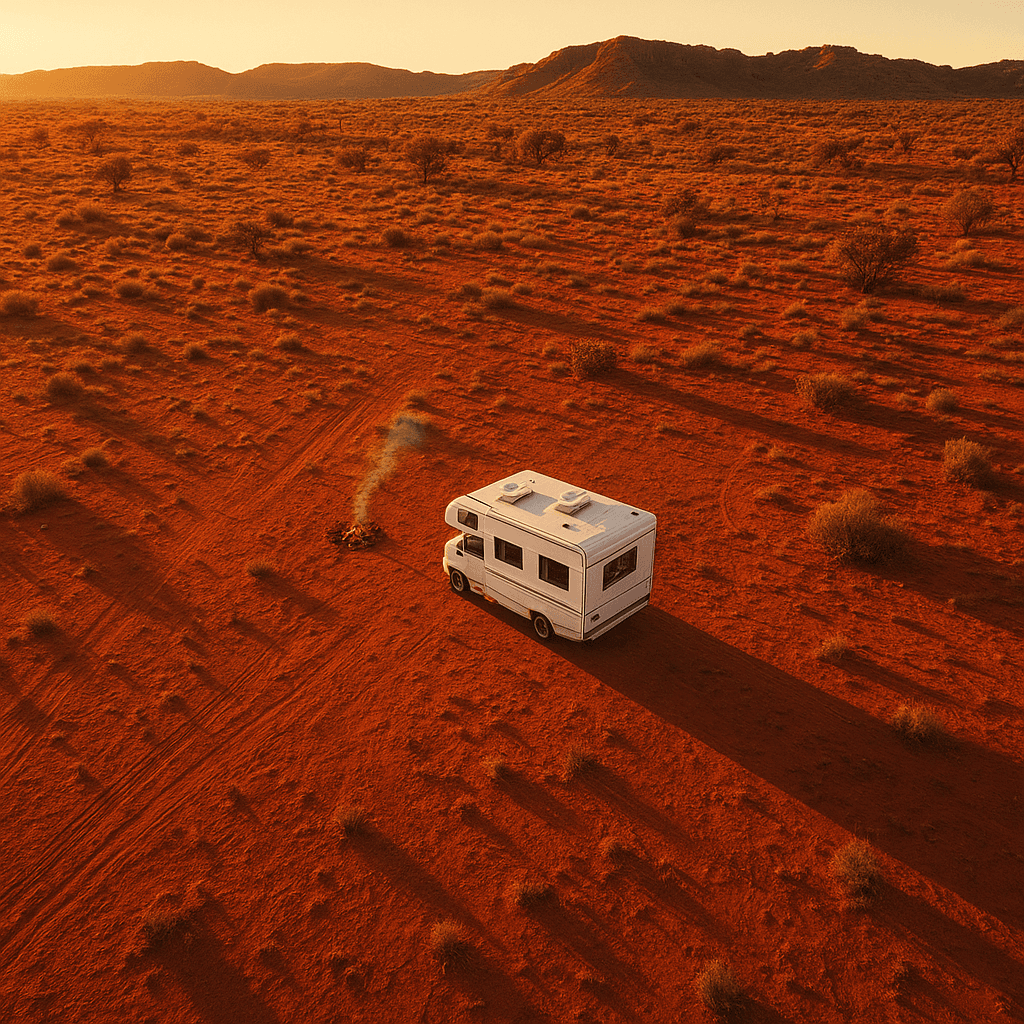
Alice Springs: RVing the Red Centre of Australia
Read more →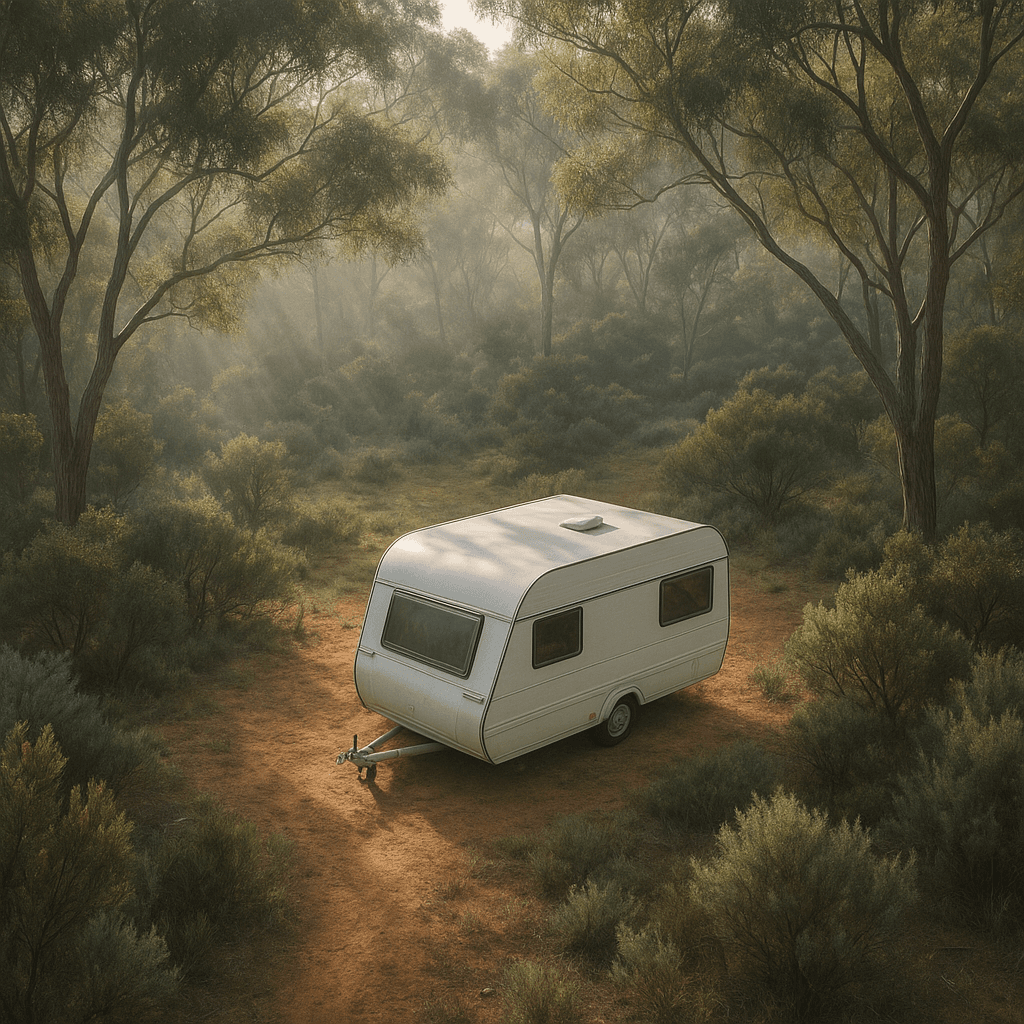
Adelaide Dump Points & Caravan Guide: Australia's Wine Capital for RVers
Read more →
Hitting the Great Australian Outback: A Guide to RVing Down Under for First-Timers
Hello, Mate! Ready to buckle up for an adventure of a lifetime in the land Down Under?
Read more →Frequently Asked Questions About RV Parks in Australia
What are the best caravan parks in Australia?
Australia has thousands of caravan and holiday parks, and the big private networks are the easiest place to start. BIG4 Holiday Parks runs over 300 family-focused parks with pools, jumping pillows, and amenities, while Discovery Parks and G'Day Parks (the G'Day Group) range from family resorts to nature-based, touring-focused parks. Standouts include BIG4 Adventure Whitsunday Resort in Queensland with its 13-slide waterpark, and coastal favorites along the Great Ocean Road and the New South Wales coast. The right park depends on your route, but a network membership often pays for itself over a long trip.
Do Australian caravan parks have full hookups (power, water, sewer)?
Most caravan parks offer powered sites with electricity and water at the site, and many have ensuite or drive-through sites, but full sewer hookups right at the site are less common than in North America. Instead, parks provide a central dump point for emptying tanks, plus amenity blocks with showers and toilets. Unpowered sites are cheaper and common too. If you want power and water at your site, book a powered site; if you need to dump, use the park dump point or one of the many town and rest-area dump points found across the country.
How much does caravan park camping cost in Australia?
Expect roughly 30 to 60 Australian dollars a night for a powered site and about 20 to 40 dollars for an unpowered site, with popular coastal parks and peak holiday periods running higher, sometimes over 100 dollars. Cabins start around 80 dollars and climb past 150 for premium ones. National-park camping is much cheaper, often just 7 to 15 dollars per person. Free rest-area and bush camping can bring your nightly average right down. Pet fees of 5 to 10 dollars and extra-person charges are common, so check the fine print when booking.
How far ahead do I need to book a caravan site in Australia?
It depends on where and when. School holidays, the Christmas and January summer peak in the south, and the dry-season winter peak in the tropical north all require booking well ahead, sometimes months for popular coastal and reef-area parks. Outside those windows, you can often travel more spontaneously, especially with free camping and first-come national-park sites as backup. National-park campsites are booked online through each state parks service. As a rule, book private parks ahead during any holiday period and stay flexible in the shoulder seasons.
When is the best time to go caravanning in Australia?
There is no single answer, because Australia spans the tropics to the cool south, so you tour by region and season. Travel the tropical north (Queensland, the Northern Territory, and the Kimberley) in winter, June to August, when the dry season brings warm, rain-free days, which is exactly why the grey-nomad migration heads north then. Tour the southern states in summer, December to February, for warm beach weather. Spring (September to November) is the best all-round window, with comfortable temperatures and wildflowers in the west. Match your route to the season and the weather is superb.
Can big rigs and large caravans tour Australia easily?
On the sealed highways, yes. Highway 1 rings the continent and is well suited to large caravans and motorhomes, and the major coastal and inland routes are good touring roads. The challenges are distance and unsealed roads: many national-park access tracks and outback routes are gravel, corrugated, or 4WD-only, and not suitable for big rigs or road caravans. Watch for road trains, which need plenty of room to overtake. For a big rig, stick to sealed routes and well-graded park roads, and research access conditions before committing to any remote or outback track.
Is free camping allowed in Australia?
Yes, and it is a genuine part of the touring culture, especially for self-contained rigs with their own toilet and water. Free and low-cost camping is available at highway rest areas, showgrounds, and designated bush sites across much of the country, and many travelers use a directory or app to find them. The catch is that rules vary by state and local council, and many coastal and city councils restrict or ban overnight street parking. Always read the signs, leave no trace, and be genuinely self-contained where that is required, and free camping can dramatically cut your costs.
What is the Big Lap?
The Big Lap is the iconic Australian road trip: a full circumnavigation of the continent, mostly following Highway 1, the ring road that connects every state. It is the bucket-list journey for caravanners and the grey nomads who tour Australia long-term, typically taking anywhere from three months to a year or more depending on pace and detours. Most people lap anticlockwise to follow the good weather, heading into the tropical north during the winter dry season. Along the way you string together reef, rainforest, outback, desert, and endless coast, staying in a mix of caravan parks, national parks, and free camps.
Do I need to book national-park camping in Australia?
In most states, yes. Camping in national parks generally requires a per-night booking or permit made online through each state's parks service, for example the New South Wales National Parks site, Queensland's QPWS system, the Northern Territory parks portal, or Western Australia's Parkstay. Fees are modest, often charged per person per night, and you display a permit on your vehicle or site. Some parks, particularly in Western Australia and Tasmania, still have first-come, first-served campgrounds. Because systems and rules differ from state to state, check the relevant state parks website for the area you are heading to before you arrive.
What are dump points and where do I find them in Australia?
A dump point is the Australian term for an RV sanitary dump station, where you empty your toilet cassette or black and grey tanks. They are widely available at caravan parks, in many towns (often council-provided), and at some highway rest areas, which makes self-contained and free camping practical across the country. Caravan parks include dump points as standard, and dedicated apps and directories map public ones. Because full sewer hookups at individual sites are uncommon here, planning your trip around dump points rather than at-site sewer is the normal approach for touring Australia.
Are caravan parks in Australia pet-friendly?
Many are, but not all, so check before you book. A large share of private caravan and holiday parks welcome pets, sometimes seasonally or with conditions, and usually for a small nightly fee of around 5 to 10 dollars. National parks are the bigger restriction: dogs and other pets are banned from most Australian national parks to protect native wildlife, which is a major consideration when planning a route with a pet. State forests, council reserves, and many free camps are more relaxed. If you travel with a pet, filter for pet-friendly parks and plan around the national-park restrictions.
How do I get around Australia in a caravan or motorhome?
Australia relies on national highways rather than interstates, and Highway 1 forms a continuous ring around the entire coast, making it the backbone of most trips. The Stuart Highway crosses the middle from Adelaide to Darwin, and routes like the Bruce Highway up the Queensland coast and the Eyre Highway across the Nullarbor handle the big crossings. Distances are vast, fuel stops can be far apart on remote legs, and you will share the road with road trains. Carry extra fuel and water for outback sections, take regular breaks, and plan daily distances conservatively, because the scale of the country surprises most first-timers.
What are the best caravan parks in Australia?
Australia has thousands of caravan and holiday parks, and the big private networks are the easiest place to start. BIG4 Holiday Parks runs over 300 family-focused parks with pools, jumping pillows, and amenities, while Discovery Parks and G'Day Parks (the G'Day Group) range from family resorts to nature-based, touring-focused parks. Standouts include BIG4 Adventure Whitsunday Resort in Queensland with its 13-slide waterpark, and coastal favorites along the Great Ocean Road and the New South Wales coast. The right park depends on your route, but a network membership often pays for itself over a long trip.
Do Australian caravan parks have full hookups (power, water, sewer)?
Most caravan parks offer powered sites with electricity and water at the site, and many have ensuite or drive-through sites, but full sewer hookups right at the site are less common than in North America. Instead, parks provide a central dump point for emptying tanks, plus amenity blocks with showers and toilets. Unpowered sites are cheaper and common too. If you want power and water at your site, book a powered site; if you need to dump, use the park dump point or one of the many town and rest-area dump points found across the country.
How much does caravan park camping cost in Australia?
Expect roughly 30 to 60 Australian dollars a night for a powered site and about 20 to 40 dollars for an unpowered site, with popular coastal parks and peak holiday periods running higher, sometimes over 100 dollars. Cabins start around 80 dollars and climb past 150 for premium ones. National-park camping is much cheaper, often just 7 to 15 dollars per person. Free rest-area and bush camping can bring your nightly average right down. Pet fees of 5 to 10 dollars and extra-person charges are common, so check the fine print when booking.
How far ahead do I need to book a caravan site in Australia?
It depends on where and when. School holidays, the Christmas and January summer peak in the south, and the dry-season winter peak in the tropical north all require booking well ahead, sometimes months for popular coastal and reef-area parks. Outside those windows, you can often travel more spontaneously, especially with free camping and first-come national-park sites as backup. National-park campsites are booked online through each state parks service. As a rule, book private parks ahead during any holiday period and stay flexible in the shoulder seasons.
When is the best time to go caravanning in Australia?
There is no single answer, because Australia spans the tropics to the cool south, so you tour by region and season. Travel the tropical north (Queensland, the Northern Territory, and the Kimberley) in winter, June to August, when the dry season brings warm, rain-free days, which is exactly why the grey-nomad migration heads north then. Tour the southern states in summer, December to February, for warm beach weather. Spring (September to November) is the best all-round window, with comfortable temperatures and wildflowers in the west. Match your route to the season and the weather is superb.
Can big rigs and large caravans tour Australia easily?
On the sealed highways, yes. Highway 1 rings the continent and is well suited to large caravans and motorhomes, and the major coastal and inland routes are good touring roads. The challenges are distance and unsealed roads: many national-park access tracks and outback routes are gravel, corrugated, or 4WD-only, and not suitable for big rigs or road caravans. Watch for road trains, which need plenty of room to overtake. For a big rig, stick to sealed routes and well-graded park roads, and research access conditions before committing to any remote or outback track.
Is free camping allowed in Australia?
Yes, and it is a genuine part of the touring culture, especially for self-contained rigs with their own toilet and water. Free and low-cost camping is available at highway rest areas, showgrounds, and designated bush sites across much of the country, and many travelers use a directory or app to find them. The catch is that rules vary by state and local council, and many coastal and city councils restrict or ban overnight street parking. Always read the signs, leave no trace, and be genuinely self-contained where that is required, and free camping can dramatically cut your costs.
What is the Big Lap?
The Big Lap is the iconic Australian road trip: a full circumnavigation of the continent, mostly following Highway 1, the ring road that connects every state. It is the bucket-list journey for caravanners and the grey nomads who tour Australia long-term, typically taking anywhere from three months to a year or more depending on pace and detours. Most people lap anticlockwise to follow the good weather, heading into the tropical north during the winter dry season. Along the way you string together reef, rainforest, outback, desert, and endless coast, staying in a mix of caravan parks, national parks, and free camps.
Do I need to book national-park camping in Australia?
In most states, yes. Camping in national parks generally requires a per-night booking or permit made online through each state's parks service, for example the New South Wales National Parks site, Queensland's QPWS system, the Northern Territory parks portal, or Western Australia's Parkstay. Fees are modest, often charged per person per night, and you display a permit on your vehicle or site. Some parks, particularly in Western Australia and Tasmania, still have first-come, first-served campgrounds. Because systems and rules differ from state to state, check the relevant state parks website for the area you are heading to before you arrive.
What are dump points and where do I find them in Australia?
A dump point is the Australian term for an RV sanitary dump station, where you empty your toilet cassette or black and grey tanks. They are widely available at caravan parks, in many towns (often council-provided), and at some highway rest areas, which makes self-contained and free camping practical across the country. Caravan parks include dump points as standard, and dedicated apps and directories map public ones. Because full sewer hookups at individual sites are uncommon here, planning your trip around dump points rather than at-site sewer is the normal approach for touring Australia.
Are caravan parks in Australia pet-friendly?
Many are, but not all, so check before you book. A large share of private caravan and holiday parks welcome pets, sometimes seasonally or with conditions, and usually for a small nightly fee of around 5 to 10 dollars. National parks are the bigger restriction: dogs and other pets are banned from most Australian national parks to protect native wildlife, which is a major consideration when planning a route with a pet. State forests, council reserves, and many free camps are more relaxed. If you travel with a pet, filter for pet-friendly parks and plan around the national-park restrictions.
How do I get around Australia in a caravan or motorhome?
Australia relies on national highways rather than interstates, and Highway 1 forms a continuous ring around the entire coast, making it the backbone of most trips. The Stuart Highway crosses the middle from Adelaide to Darwin, and routes like the Bruce Highway up the Queensland coast and the Eyre Highway across the Nullarbor handle the big crossings. Distances are vast, fuel stops can be far apart on remote legs, and you will share the road with road trains. Carry extra fuel and water for outback sections, take regular breaks, and plan daily distances conservatively, because the scale of the country surprises most first-timers.
What is the highest-rated RV park in Australia?
The highest-rated is Cowra Van Park with a rating of 4.7/5 stars.